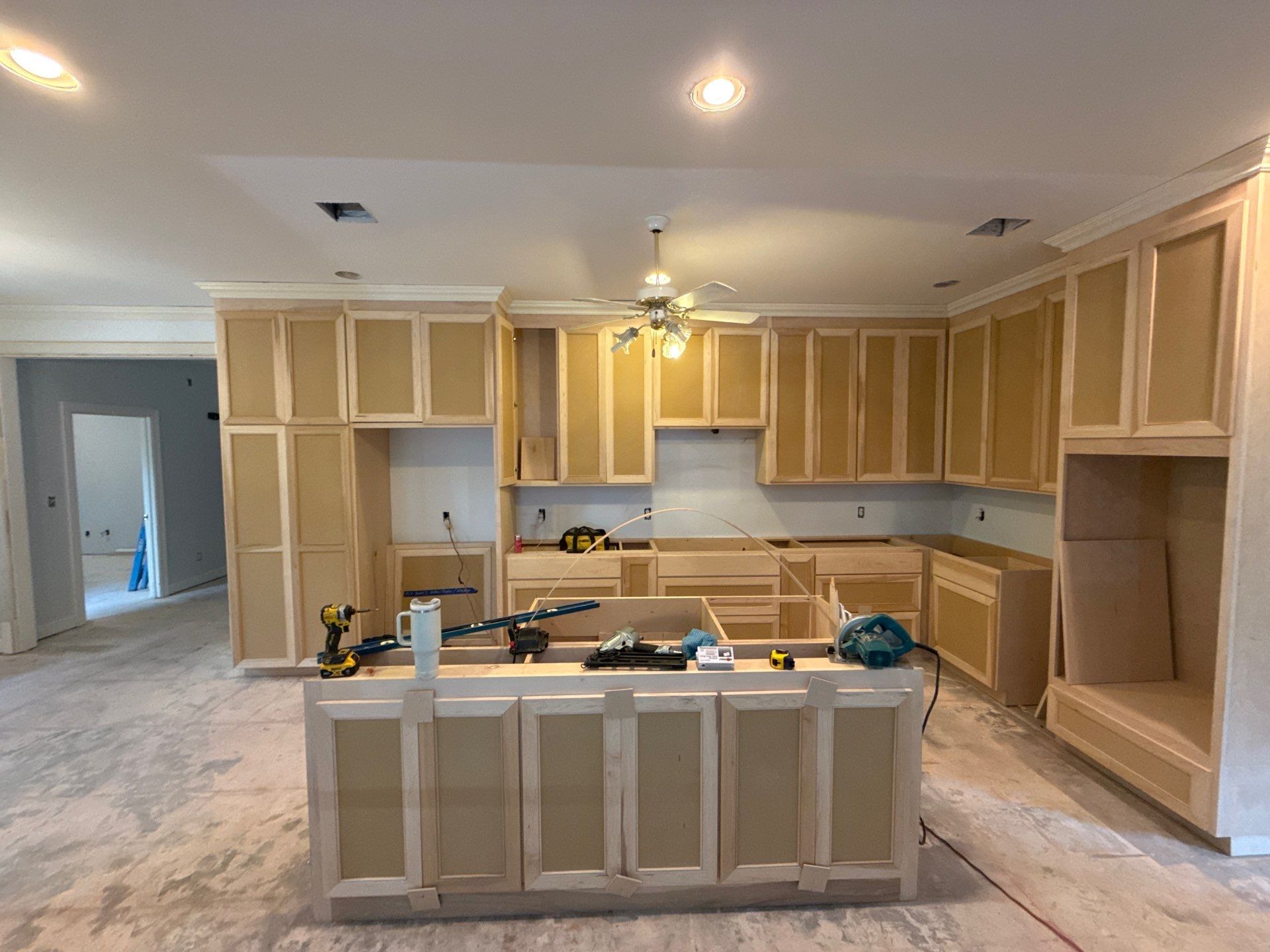
The image above captures a moment of renewal—a kitchen mid-rebuild after a harsh ice storm left behind a trail of plumbing destruction. Frozen pipes, burst lines, and water damage are all-too-common after extreme winter weather events, especially in regions not typically accustomed to deep freezes. But with damage comes opportunity—a chance to rebuild better, stronger, and with a fresh design.
Ice Storms & Plumbing: A Costly Combo
During severe ice storms, water inside plumbing lines can freeze and expand. In uninsulated walls or poorly protected piping systems, this expansion often leads to burst pipes. Once the ice thaws, the real damage begins—leaks behind walls, under cabinets, and across floors. In many cases, the kitchen suffers the most because it contains a web of water lines: to the sink, dishwasher, refrigerator, and sometimes even laundry hookups nearby.
From Demolition to Rebuild
In this kitchen, the aftermath required a full gut. The old cabinetry was removed, damaged drywall and insulation pulled out, and plumbing lines replaced or rerouted. The photo shows the current stage of cabinet installation—a major step forward.
Here’s a look at what goes into a post-storm kitchen rebuild like this one:
🧊 Step 1: Mitigate Water Damage
- Immediate shut-off of the water supply.
- Removal of damaged drywall, insulation, flooring, and cabinetry.
- Dehumidifiers and fans to dry out the structure and prevent mold.
- Plumbing inspection to assess the full scope of damage.
🔧 Step 2: Repair or Replace Plumbing
- Replace ruptured PEX or copper lines.
- Add insulation or reroute pipes away from exterior walls.
- Consider installing a shut-off valve system to automatically detect future leaks.
🪚 Step 3: Rebuild Phase Begins
The image above shows:
- New custom cabinetry frames installed on walls and in the island.
- Trim work started, awaiting doors, drawers, and hardware.
- Open ceiling vent holes—indicating possible HVAC or electrical upgrades.
- Tools and layout items, showing that the space is actively under construction.
💡 Step 4: Upgrade for the Future
This rebuild isn’t just about restoring what was lost. It’s a chance to improve:
- New layout: Maybe the original kitchen had poor flow. Now's the time to fix it.
- Better materials: Moisture-resistant cabinet boxes, upgraded countertops, and sealed flooring options can offer better protection against future leaks.
- Modern systems: Updated plumbing, new electrical, and better ventilation—all critical for both function and code compliance.
Final Thoughts: Turning Disaster into a Design Opportunity
No homeowner wants to face the destruction of an ice storm—but if it happens, investing in a thoughtful rebuild can actually improve your home’s value and livability. The kitchen in this photo is a symbol of resilience: proof that even after major setbacks, you can build back smarter, stronger, and more beautiful than before.
Are you recovering from winter storm damage? Talk to licensed contractors who understand how to prevent future freezes—and how to bring your kitchen back to life with intention and quality.
Share this story