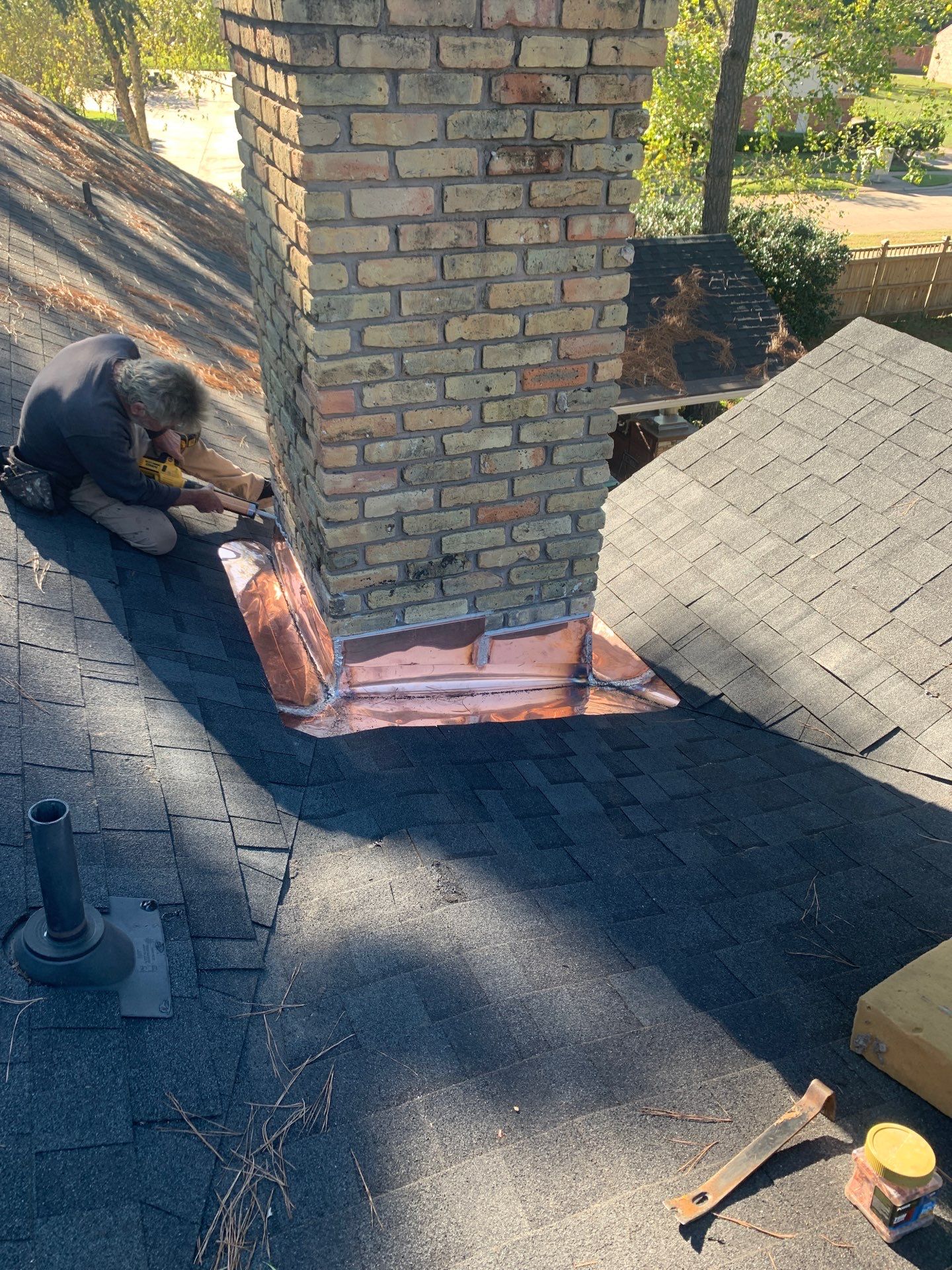
When it comes to roof integrity and long-term weatherproofing, few details are as important—or as often overlooked—as proper chimney flashing. In the photo above, we see a skilled craftsperson installing copper flashing around a brick chimney. What really stands out is the lead-soldered seam work, a hallmark of traditional craftsmanship and superior durability.
What Are Lead-Soldered Seams?
Lead-soldered seams involve joining pieces of copper flashing together using a lead-based solder. This is done by heating the copper and applying solder at the joints, creating a watertight, permanent bond. Unlike adhesives or caulks, soldering fuses the metals, forming a single, solid unit that resists separation and leaks over decades.
Why Use Copper Flashing?
Copper is often chosen for chimney and roof flashing for several reasons:
- Durability: Copper can last over 75 years instead of 30 years for other metals.
- Malleability: It's easy to shape around bricks, corners, and angles.
- Aesthetics: Copper adds a classic, high-end look to any roofing project.
- Patina: Over time, copper develops a protective green patina that further enhances its longevity.
The Advantages of Lead-Soldered Seams
Thermal Stability: Unlike sealants that expand and contract excessively, soldered copper handles thermal changes better, reducing the risk of seam failure.
Leak-Proof: Soldered seams eliminate gaps where water could penetrate, especially in complex areas like chimney corners and step flashing transitions.
Permanence: Once soldered, copper seams don’t come apart unless physically damaged. This is far superior to caulk or mastic, which can dry out and crack over time.
Historic & Proven: Lead-soldering has been used for centuries in roofing and plumbing. Many historical buildings still have original soldered copper flashing in excellent condition.
Craftsmanship Matters
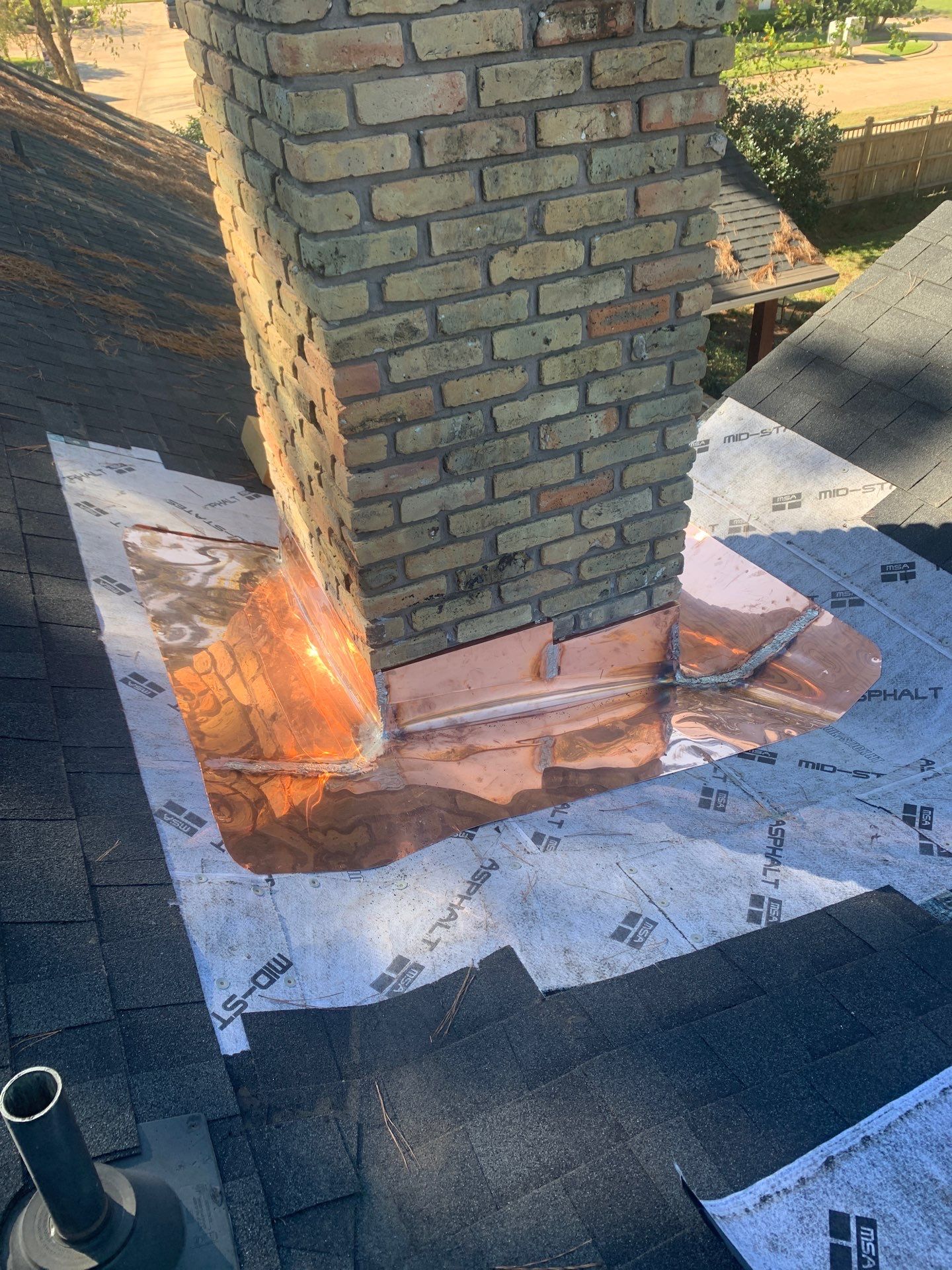
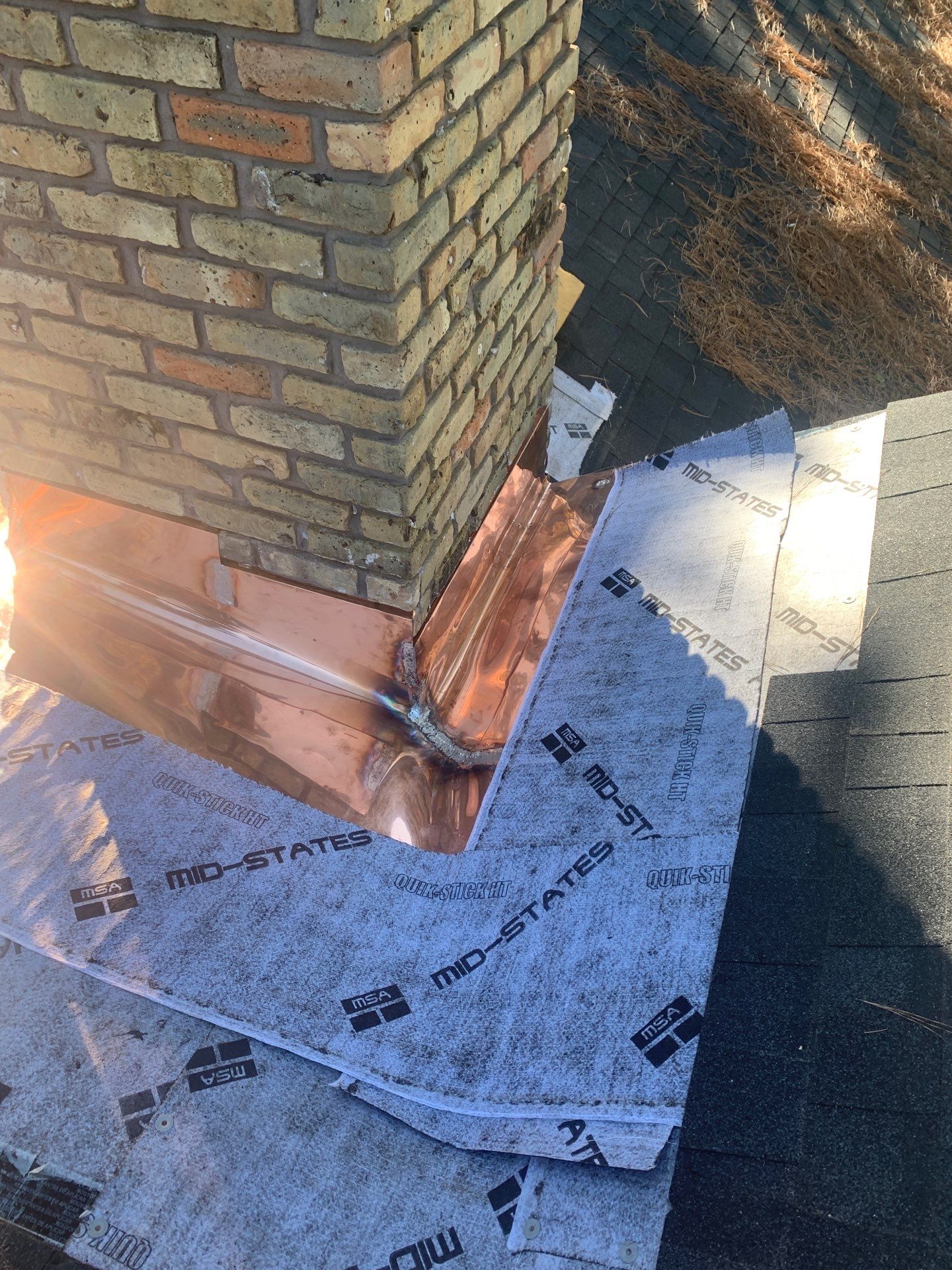
In the photo, you’ll notice that the copper has been neatly bent and carefully fitted against the chimney, with soldered joints running cleanly along the base. This kind of work requires a steady hand, a torch, and a deep understanding of metalworking. It’s not something you typically see in mass-produced or rushed roofing jobs.
The installer is using a heat source (likely a propane torch) and applying the solder to bond the copper sheets together. The attention to detail ensures that not only is the flashing watertight, but it also enhances the aesthetic of the home.
Final Thoughts
Lead-soldered seams on copper flashing are a premium solution for waterproofing around chimneys, valleys, and other critical roof junctions. While they may cost more upfront and require a higher level of skill, the longevity, reliability, and beauty of the result speak for themselves.
If you're building a new home or repairing an old roof, consider investing in copper flashing with soldered seams. It's not just a repair—it's a long-term investment in craftsmanship and peace of mind.
Share this story